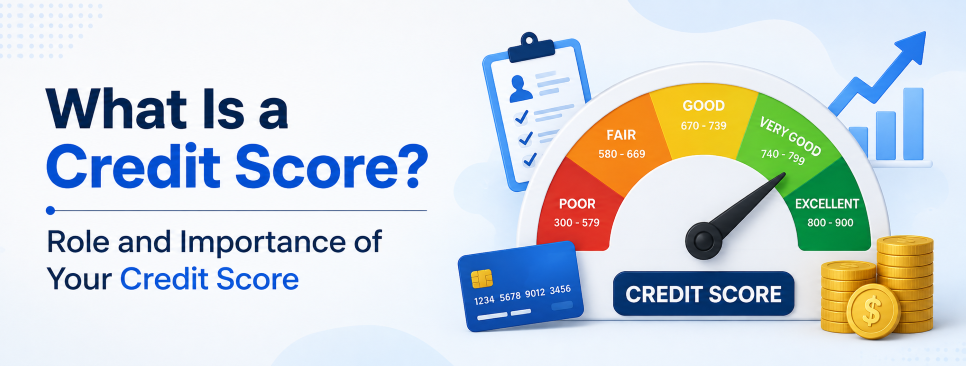
What Is a Credit Score? Role and Importance of Your Credit Score
What is a credit score and why does it matter? Learn how credit scores work, the ideal range, and how a good score unlocks better loans in India.
Introduction:
Picture this: you walk into a bank in Bangalore, ready to apply for a personal loan to fund your child's education or renovate your home. The loan officer looks at your application, taps a few keys, and within seconds tells you whether you qualify, and at what interest rate. What just happened? They checked your credit score.
If you have ever wondered what a credit score is and why lenders treat it like a golden ticket, you are not alone. Millions of Indians apply for credit every year, yet many don't fully understand the number that silently decides their financial future. A poor credit score can mean rejected loan applications, sky-high interest rates, or embarrassing credit card denials. A good one can mean instant approvals, lower EMIs, and better negotiating power.
In this guide, we'll break down the credit score meaning, how credit score works, the credit score range you should aim for, and why credit score is important for anyone planning to borrow money in India. By the end, you'll know exactly where you stand, and how to improve it.
What Is a Credit Score? A Simple Definition
A credit score is a three-digit number, typically ranging from 300 to 900, that represents your creditworthiness, essentially, how likely you are to repay borrowed money on time. It is calculated by credit bureaus like CIBIL, Experian, Equifax, and CRIF High Mark using data from your past loans, credit cards, and repayment behavior.
Think of it as a financial report card. Just as your school grades reflected your academic performance, your credit score reflects your financial discipline. Banks, NBFCs, and fintech lenders use this score to quickly assess risk before approving a personal loan, credit card, home loan, or car loan.
In short: the higher your credit score, the more trustworthy you appear to lenders.
How Credit Score Is Calculated: The Five Key Factors
Understanding how credit score is calculated helps you take control of it. While each bureau uses a slightly different algorithm, most credit scoring models weigh these five factors:
1. Payment History (35% weightage)
This is the single biggest factor. Have you paid your credit card bills and EMIs on time, every time? Late payments, defaults, or missed EMIs drag your score down significantly.
2. Credit Utilization Ratio (30% weightage)
This measures how much of your available credit limit you're using. For example, if your credit card limit is ₹1,00,000 and you consistently spend ₹80,000, your utilization ratio is 80%, which lenders see as risky. Ideally, keep utilization below 30%.
3. Length of Credit History (15% weightage)
The longer you've had credit accounts open and managed responsibly, the better. This is why closing your oldest credit card isn't always a smart move.
4. Credit Mix (10% weightage)
A healthy combination of secured loans (like home or car loans) and unsecured loans (like personal loans and credit cards) shows lenders you can manage different types of debt responsibly.
5. New Credit Inquiries (10% weightage)
Every time you apply for a loan or credit card, a "hard inquiry" is recorded. Too many inquiries in a short period can signal credit hunger and lower your score.
Want to see exactly what factors are dragging your score down? Read our detailed guide: What Lowers Your Credit Score? 10 Common Mistakes to Avoid.
Credit Score Range: What Do the Numbers Mean?
Here's a quick breakdown of the standard credit score range used by CIBIL and most Indian lenders:
| Score Range | Rating | What It Means |
|---|---|---|
| 300–549 | Poor | High risk; loan approval unlikely |
| 550–649 | Fair | Some lenders may approve, but at higher interest rates |
| 650–749 | Good | Decent approval chances with reasonable terms |
| 750–900 | Excellent | Fast approvals, lowest interest rates, higher loan amounts |
| No History (NA/NH) | New to credit | No score yet; first-time borrowers |
A good credit score in India is generally considered to be 750 and above. If you're in this range, you're in the top tier of borrowers that banks compete to lend to.
Why Credit Score Is Important: The Real-World Impact
Let's move beyond the definition and talk about why credit score is important in everyday financial life.
1. It Decides Loan Approval or Rejection
Lenders use your score as the first filter. A low score often leads to outright rejection, regardless of your income.
2. It Affects Your Interest Rate
Even a 50-point difference in your score can change your personal loan interest rate by 2–4%. Over a 5-year loan tenure, that could mean paying tens of thousands of rupees extra in interest.
3. It Impacts Loan Amount and Tenure
Borrowers with excellent scores are often offered higher loan amounts and more flexible repayment tenures, giving them greater financial flexibility.
4. It Influences Credit Card Approvals and Limits
Premium credit cards with better rewards and higher limits are typically reserved for applicants with strong scores.
5. It Can Affect Job Applications and Rentals
Some employers in finance-related roles and landlords now check credit reports as part of their screening process, particularly for high-trust positions.
6. It Builds Long-Term Financial Credibility
A consistently good score signals financial discipline, useful not just for loans, but for future business credit, co-signing, and negotiating better terms.
The Role of Credit Score in Loan Approvals
The role of credit score in the lending ecosystem cannot be overstated. Here's what typically happens during a loan application process:
- Application Submitted — You apply for a personal loan, credit card, or other credit product.
- Credit Bureau Check — The lender pulls your credit report and score from CIBIL or another bureau.
- Risk Assessment — Based on your score, income, and existing debt, the lender calculates your risk profile.
- Interest Rate & Terms Decided — A higher score often unlocks lower interest rates and better terms.
- Approval or Rejection — Final decision is made, often within minutes for digital lenders.
This is why fintech platforms and banks alike prioritize credit score checks, it's faster, data-driven, and reduces default risk. If you're planning to apply for a personal loan, checking your score beforehand can save you from rejection and help you negotiate better terms.
Benefits of a Good Credit Score
Maintaining a good credit score isn't just about avoiding rejection, it comes with tangible financial advantages:
- Lower interest rates on personal loans, home loans, and car loans
- Higher loan eligibility and larger sanctioned amounts
- Faster approvals with minimal documentation
- Better credit card offers, including premium cards with cashback and travel benefits
- Stronger negotiating power with banks and NBFCs
- Pre-approved loan offers from banks you already have a relationship with
- Lower processing fees on many loan products
In a competitive lending market like Bangalore, where fintech NBFCs and traditional banks both vie for borrowers, your credit score is often the deciding factor in who gets the best deal.
How to Check Your Credit Score
Many people go years without ever checking their credit score, until a loan gets rejected. The good news is that checking your score is free, fast, and doesn't hurt your credit.
Here's how to check your credit score in a few simple steps:
- Visit a credit bureau website (CIBIL, Experian, Equifax) or a trusted fintech platform.
- Enter your PAN, date of birth, and basic contact details.
- Verify your identity via OTP.
- View your score and detailed credit report instantly.
Pro tip: Checking your own score is a "soft inquiry" and does not impact your credit score, unlike when a lender checks it during a loan application ("hard inquiry").
You can get your score instantly and for free using our tool: Check Your Free Credit Score Now.
For a deeper dive into the process, read: Free Credit Score Check: Everything You Need to Know in 2026.
What Shows Up on Your Credit Report
Your credit score is derived from your credit report, a detailed document maintained by credit bureaus. It typically includes:
- Personal information (name, PAN, address)
- Active and closed loan accounts
- Credit card details and limits
- Payment history and any defaults
- Number of recent credit inquiries
- Outstanding debt amounts
Understanding what's on this report helps you spot errors early, a surprisingly common issue that can unfairly lower your score. To learn more, check out: What Shows on a Credit Report? 6 Key Things to Know.
Common Myths About Credit Scores (Quick Clarifications)
- Myth: Checking your own score lowers it. Fact: Self-checks are soft inquiries and have no impact.
- Myth: Closing old credit cards improves your score. Fact: It can actually hurt your credit history length and utilization ratio.
- Myth: You need to carry a balance to build credit. Fact: Paying your full bill on time builds credit just as effectively, without interest charges.
- Myth: Income determines your credit score. Fact: Income isn't a scoring factor, repayment behavior is.
How to Improve or Maintain a Good Credit Score
If your score isn't where you want it to be, here are practical, actionable steps:
- Pay EMIs and credit card bills on time, every time, set up auto-pay if needed
- Keep credit utilization under 30% of your total limit
- Avoid applying for multiple loans or cards in a short span
- Maintain a healthy mix of secured and unsecured credit
- Regularly review your credit report for errors and dispute inaccuracies
- Don't close your oldest credit accounts unnecessarily
- Limit loan guarantor commitments, as defaults by the primary borrower affect your score too
Improving your score isn't instant, it typically takes 4 to 6 months of consistent good behavior to see meaningful change, though significant improvements can take a year or more depending on your starting point.
Conclusion: Take Control of Your Credit Score Today
So, what is a credit score, really? It's more than just a number, it's a reflection of your financial trustworthiness that shapes your access to loans, interest rates, and financial opportunities. Understanding the role of credit score and actively working to maintain a good one puts you in the driver's seat when it comes to borrowing money on your terms, not the lender's.
Whether you're planning to apply for a personal loan, upgrade your credit card, or simply want peace of mind, the first step is knowing where you stand.
Ready to see your score? Check your free credit score instantly and take the first step toward better financial health, and when you're ready to apply, explore FixRupee's credit card options built for every credit profile: Explore FixRupee Credit Cards.
Frequently Asked Questions (FAQs)
1. What is a credit score in simple terms?
A credit score is a three-digit number (usually 300–900) that shows lenders how reliably you repay borrowed money, based on your credit history.
2. What is considered a good credit score in India?
A score of 750 or above is generally considered a good credit score, offering better chances of loan approval and lower interest rates.
3. How is credit score calculated?
It's calculated using factors like payment history, credit utilization, length of credit history, credit mix, and recent credit inquiries.
4. Does checking my own credit score lower it?
No. Checking your own score is a soft inquiry and has no negative impact on your credit score.
5. How often should I check my credit score?
It's a good practice to check your credit score every 3 to 6 months, especially before applying for a major loan or credit card.
6. Can I get a personal loan with a low credit score?
It's possible but harder, you may face higher interest rates, lower loan amounts, or need a guarantor. Improving your score first is usually the better strategy.